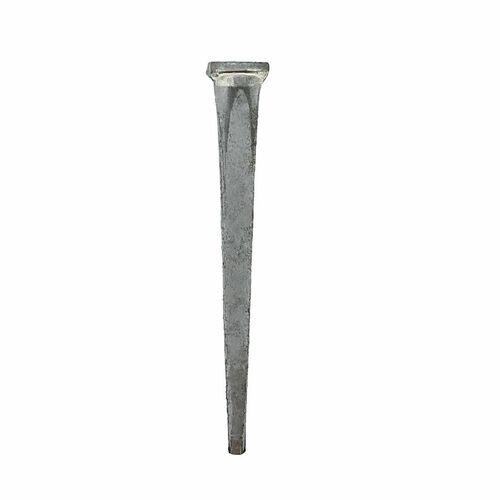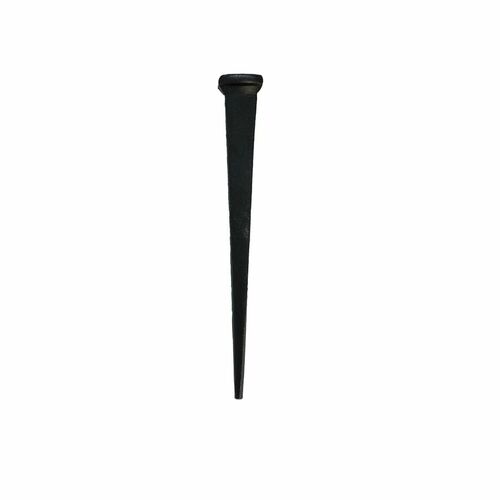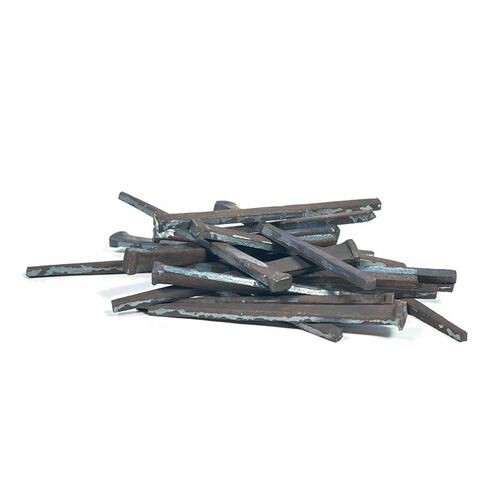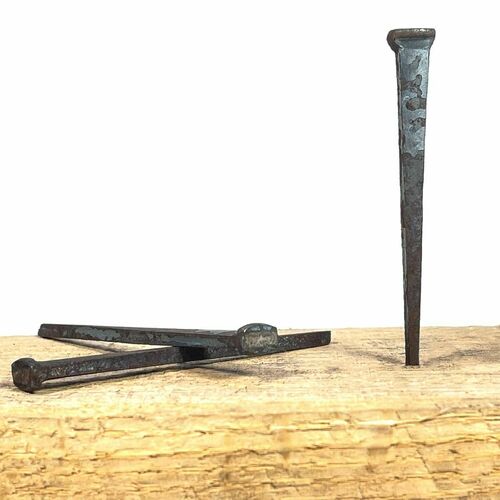
A pine floor to face-nail, a batten door to build, furring strips to fix to cinder block, rough sawn siding on an old house: Tremont makes a cut nail for each of these jobs. Pick the type first, then the length, the finish and the box.
Tremont cut nails at Acorn
Acorn Manufacturing bought the Tremont Nail Company in 2006. Each of the eleven Tremont pages quoted here says the nails come from original 19th and early 20th century nail machines, so head shape may vary and length may differ slightly. Only some pages name the metal. Cut spikes are made from heated steel plate fed by hand into Tremont's oldest machine, from about 1865; common siding nails are low-carbon steel.
Which cut nail for which job
Eleven of Tremont's 20 nail types, plus one Glasgow nail, with uses Acorn lists for each:
- Common (CC): framing, scaffolding, face-nailing pine or softwood floors, siding, batten doors and paneling.
- Common rosehead (CCR): framing, face-nailing floors, siding and batten doors; a rounded bump tops the head.
- Clinch rose-head (CLR): a distinct button head; Tremont says the nail is malleable enough to be clinched. Furniture repair, face-nailing wide board flooring, batten doors and paneling.
- Fire door clinch (CD): for laminated doors, clapboard siding, face-nailing wide board flooring and wood fencing. As the name says, the nails can be clinched; the page gives no fire rating.
- Boat (CB): for wooden boat construction, Tremont says to use only the hot-dip galvanized nails. Standard boat nails are often used for face-nailing floors.
- Hardened flooring (CFH): for tongue and groove hardwood flooring; Tremont warns that the head is too small for face-nailing softwood floors. Sizes 3d, 4d, 6d, 7d, 8d, 10d and 16d.
- Masonry (CMH): hardened by heat treating, for furring strips on cinder block, mortar joints, new concrete and brick, and for face-nailing hardwood floors. Same sizes as the common nail.
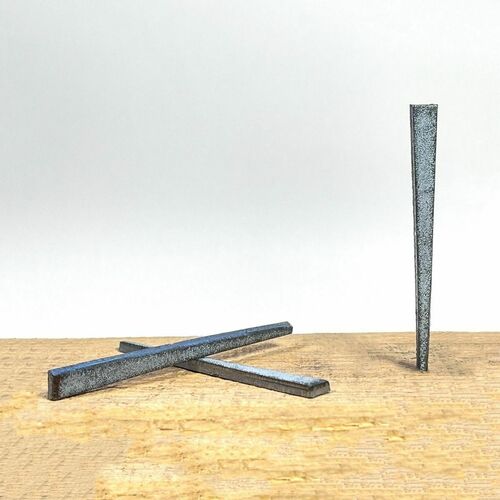
- Cut spikes (CK): heavy construction; Tremont says they drive well through planking and heavy timber for deck and bridge work.
- Foundry (CY): also called tie keys, for foundry casting, concrete form work and metal sculpting. Sizes 10d, 20d, 40d, 50d and 60d.
- Common siding (CCS): general purpose work, wood fences and wood siding over sheathing. Low-carbon steel, 7d only.
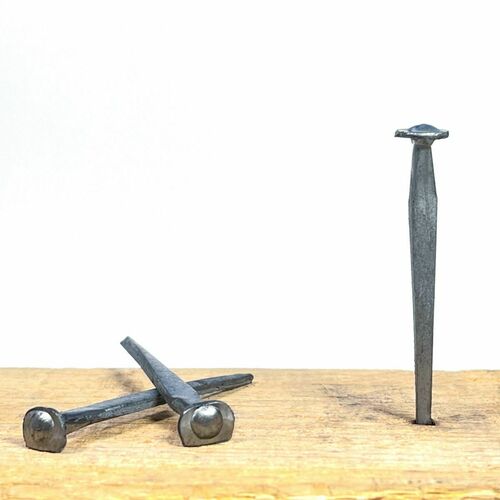
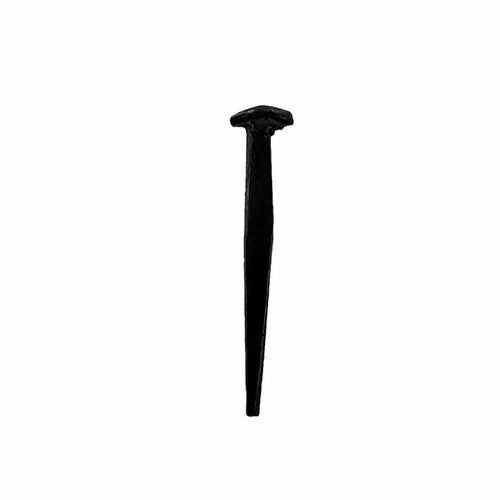
- Decorative wrought head (CW): made to look like the hand-forged nails of the 1700s, with a three-sided head, for reproduction and restoration work such as rough sawn siding, face-nailed flooring and batten doors.
- Glasgow rosehead fine shank (FS): a rosehead and a long taper down the shank, used for restoration and conservation projects.
Penny size to inches: how long is an 8d nail?
Tremont's labels pair inches with penny size, as in 2-1/2" 8d: an 8d nail is 2-1/2 inches long. The common nail chart covers 4d to 20d, with Tremont's approximate count per pound:
| Size | Length | Per pound |
|---|---|---|
| 4d | 1-1/2 in. | 126 |
| 6d | 2 in. | 92 |
| 7d | 2-1/4 in. | 78 |
| 8d | 2-1/2 in. | 64 |
| 10d | 3 in. | 48 |
| 12d | 3-1/4 in. | 43 |
| 16d | 3-1/2 in. | 34 |
| 20d | 4 in. | 22 |
Other sizes on these pages: 2d (1 inch), 3d (1-1/4), 5d (1-3/4), 40d (5), 50d (5-1/2), 60d (6), 70d (7) and 80d (8 inches). The shortest decorative wrought head nail, 5/8 inch, has no penny size.
Finishes for indoor and outdoor work
The finishes are standard, hot-dip galvanized and black oxide; not every type comes in all three. For exterior work the common, common rosehead and common siding pages recommend hot-dip galvanized. Of the eleven Tremont types above, all but masonry and foundry nails are offered in that finish. Flooring nails, masonry nails and cut spikes are hardened.
Black oxide comes on decorative wrought head and fire door clinch nails, and on select sizes of common and clinch rose-head nails. The galvanized decorative wrought head is shiny silver, not black. In the products shown below this guide, CC4L is a standard common nail and CC6ML a black oxide one.
How many nails are in a 1, 5 or 50 lb box?
Each Tremont page quoted here offers 1, 5 and 50 pound boxes; multiply the count per pound by the box weight. At about 64 per pound, a 5 lb box of 8d common nails holds roughly 320. Approximate counts per pound from five more Tremont charts and the Glasgow page:
- Clinch rose-head: 3d 248, 4d 220, 5d 175, 6d 170, 7d 100, 8d 88, 10d 54, 16d 36, 20d 27
- Decorative wrought head: 5/8 in. 280, 2d 205, 4d 138, 6d 66, 8d 42, 10d 31
- Fire door clinch: 6d 158, 8d 100, 10d 55
- Boat: 4d 113, 6d 72, 8d 48, 10d 25, 12d 19, 16d 14, 20d 13, 40d 10, 60d 8
- Cut spikes: 10d 20, 16d 18, 20d 16, 40d 10, 50d 9, 60d 8, 70d 7, 80d 5
- Glasgow rosehead fine shank, sold by the pound: 50 x 3 mm 102, 65 x 3 mm 79, 75 x 3.2 mm 61, 100 x 4 mm 32
Face nailing and blind nailing a floor
All six Tremont charts carry the same face nailing table. The rows for two nails per joist (the table adds three per joist from 8 inch boards and four from 12 inch):
| Board width | Per joist | Per 100 sq ft |
|---|---|---|
| 4 in. | 2 | 700 |
| 6 in. | 2 | 400 |
| 8 in. | 2 | 300 |
| 10 in. | 2 | 250 |
| 12 in. | 2 | 200 |
| 14 in. | 2 | 170 |
| 16 in. | 2 | 150 |
The flooring nail page describes blind nailing: the nail goes in at a 45 degree angle and usually has a small head that is not visible once the floor is laid. Tremont's spacing:
- Boards 2 to 2-3/4 inches wide: one nail every 8 to 10 inches
- Boards 3 to 3-3/4 inches wide: one nail every 6 to 8 inches
- Boards 4 to 7 inches wide: one nail every 6 inches
Reading the titles of our Tremont listings
A title such as Acorn CC6ML 2" 6d Common Nails - Black Oxide Finish - 50 lb spells out length, penny size, finish and box. Acorn's site does not list these item codes, so go by the words in the title, not by the letters in the code. More Acorn hardware is on our Acorn brand page.
Not sure which nail fits? Our customer support team is available Monday - Friday, 8 AM - 4 PM Central Time, at 1-888-800-7789 or [email protected].
Related Products